Cleansing balm development is a balance between scoopability, skin melt and rinse behavior. A benchmark can start the discussion, but the brief should explain the desired transformation and the conditions in which the product will be sold and used.
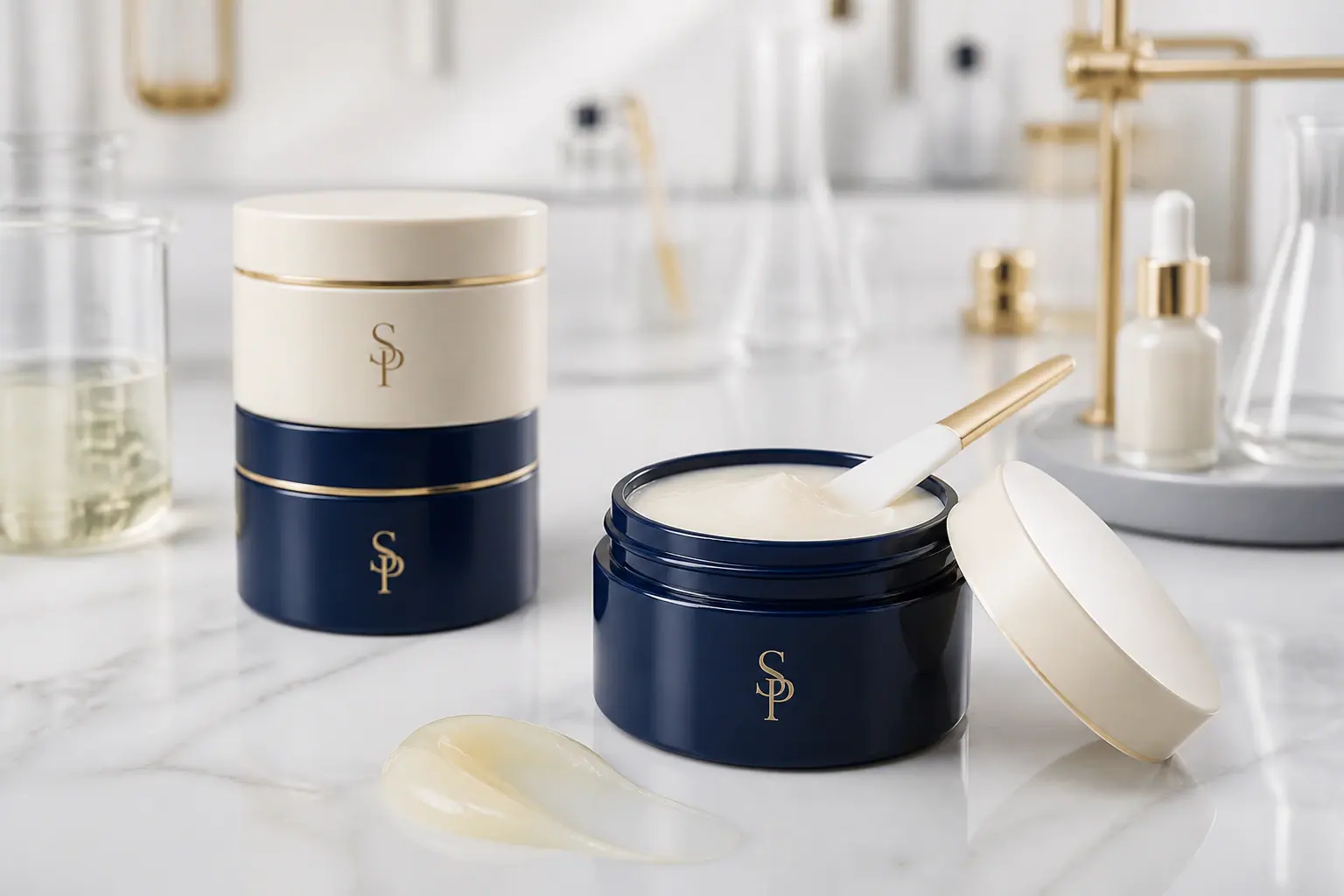
Describe the texture journey
Record how easily the balm lifts from the jar, how quickly it spreads, whether it becomes oil-like, how it emulsifies with water and the residue expected after rinsing. Warm and cool storage can change first impression, so evaluate representative samples after relevant conditioning.
Jar decisions that affect use
Opening diameter, shoulder shape and inner lid influence access and cleanliness. A spatula may improve portion control, but it needs a storage solution. Review liner fit, closure torque, decoration and leakage with the finished formula.
A compact approval card
- Scoop: firm, soft or seasonally stable?
- Melt: immediate or controlled?
- Rinse: milky, quick or cushioned?
- After-feel: clean, soft or lightly emollient?
- Pack: jar size, closure and spatula confirmed?
Directions reduce misuse
State whether to apply with dry hands, massage onto dry skin and add water before rinsing, if that matches the approved product. Eye-area language and makeup-removal claims require careful review. Do not imply disease treatment, and match claims to available support and local rules.
FAQ
Why can a cleansing balm grain over time?
Crystal behavior, cooling conditions and temperature cycling can influence texture. The manufacturer should investigate the specific formula and process rather than rely on a generic explanation.
When should the jar be selected?
Select a direction early, then confirm the final component with representative formula and agreed compatibility checks.
Explore SHANGPIN LAB skincare categories and share your cleansing brief.