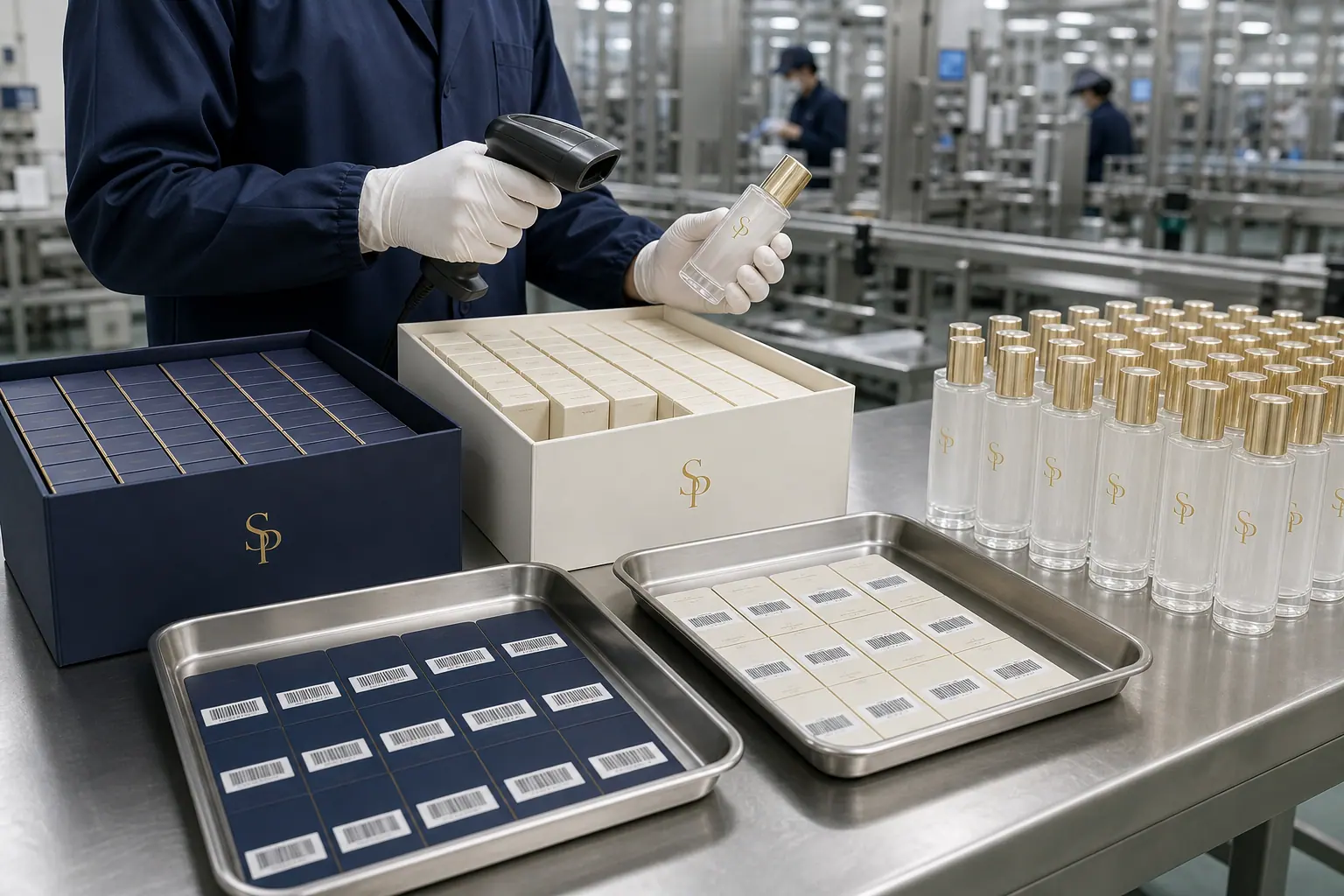
Label reconciliation compares the quantity of controlled labels issued to production with the quantities used, damaged and returned. Together with line clearance and artwork control, it helps reduce the risk of one SKU, shade or market version being applied to another product.
Why cosmetic ranges are vulnerable to mix-ups
Beauty portfolios often use near-identical bottles across multiple shades, fragrances, languages or sizes. The visible difference may be only a label code, carton panel or small color reference. As the range grows, visual memory becomes an unreliable control.
Build identification into the job
- Use a unique item code for every approved label version.
- Link that code to the product, size, shade, language and artwork revision.
- Show the current code on the production order and packaging BOM.
- Keep an approved reference or controlled artwork proof available.
What happens before the line starts
Line clearance checks that material from the previous job has been removed and that the correct components are present. The team can verify the product code, label code, carton code, batch-coding setup and representative samples before releasing the line.
The reconciliation calculation
A simple record accounts for labels issued, labels applied to accepted units, labels on rejected units, damaged labels and labels returned or destroyed under the agreed process. An unexplained difference should be investigated according to the site’s procedure rather than adjusted for convenience.
Useful supporting controls
- Physical separation of label versions.
- Barcode or vision checks where appropriate.
- Controlled access to excess labels.
- Recorded start-up and changeover samples.
- Second-person verification for high-similarity SKUs.
Coordinate labels with cartons and digital content
A reconciled label can still carry outdated copy if artwork approval is weak. Connect issuance to the approved artwork revision and maintain consistent product data across the carton, ecommerce page and market files. See the artwork version-control guide.
Frequently asked questions
Is reconciliation needed for pressure-sensitive labels only?
The concept can apply to other controlled printed components, but the exact procedure depends on the site’s system and the risk of mix-up.
Can barcode scanning replace line clearance?
Scanning can strengthen identification, but it does not automatically replace the broader check of equipment, materials and remnants from the previous job.
Who reviews an unexplained discrepancy?
The responsible production and quality functions should follow the defined investigation and disposition process before the batch is released.
Brands can include SKU architecture, target markets and artwork status when they brief SHANGPIN LAB.