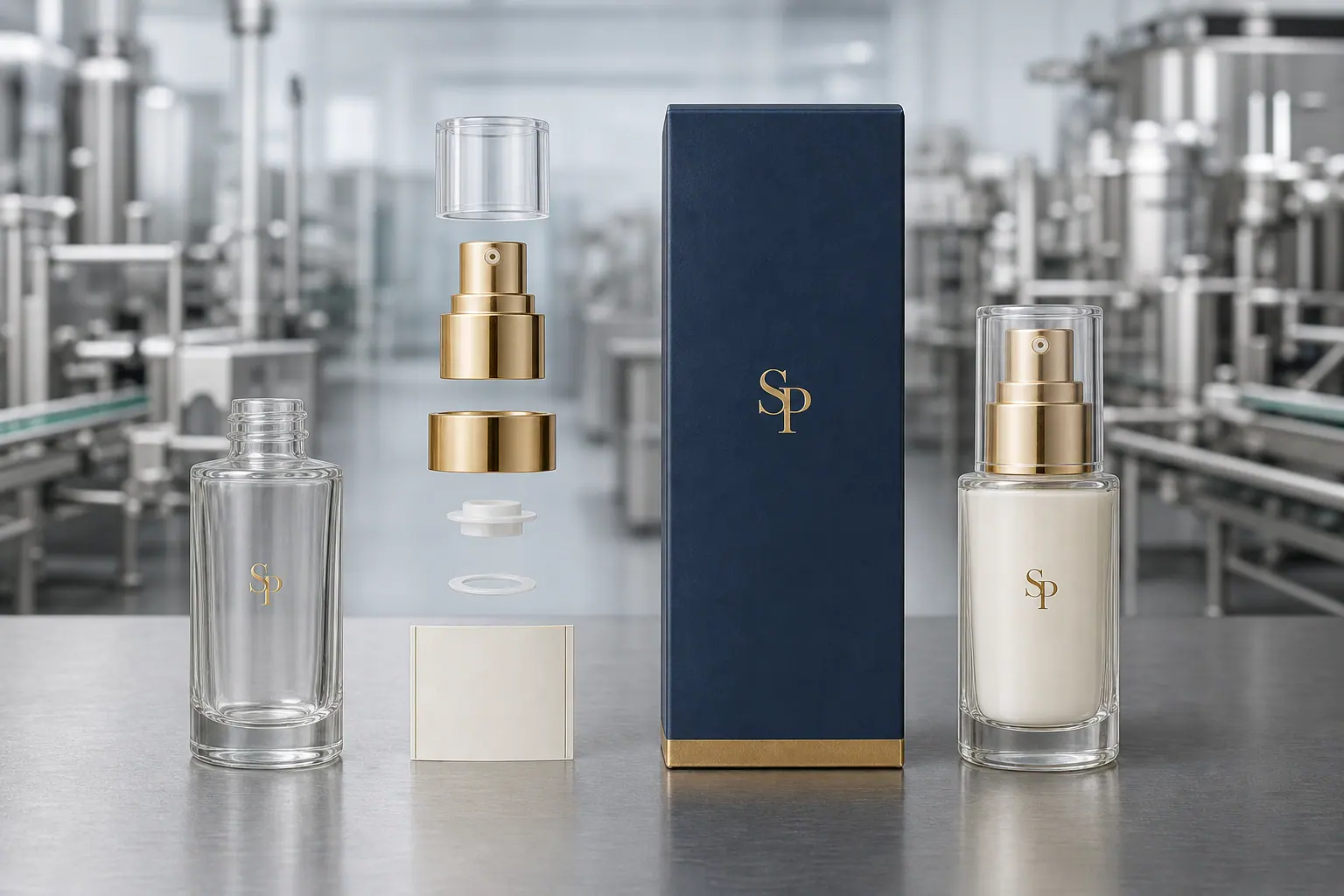
A cosmetic packaging bill of materials, or BOM, is the controlled list of every component needed to build one finished saleable unit. It should identify more than the bottle and carton. Pumps, collars, gaskets, wipers, labels, inserts, seals and decoration versions can all affect assembly, appearance and performance.
Why a packaging BOM matters
Beauty packs often combine parts from several suppliers. A visually similar cap may use a different resin, thread or finish. A carton may carry the correct artwork but the wrong insert. The BOM creates a single reference for procurement, incoming inspection, line setup and change control.
Core fields for each component
- Internal component code and clear description.
- Approved supplier and supplier item reference.
- Material, nominal dimensions and capacity where relevant.
- Color, finish and decoration method.
- Approved drawing, artwork or specification revision.
- Inspection points and reference sample.
- Quantity used per finished unit, including any controlled allowance.
For multi-market launches, the BOM may also separate language-specific labels or cartons while keeping common primary components under shared codes.
Think in assemblies, not isolated parts
A pump is not approved in isolation. It must work with the bottle neck, gasket, formula and overcap. A label must fit the actual decoration area and remain readable after application. Organizing the BOM by primary pack, dispensing system, decoration, secondary pack and shipper helps teams see these dependencies.
Example assembly structure
- Primary container: glass bottle or jar.
- Closure system: pump, dip tube, gasket, collar and cap.
- Decoration: coating, printing, label or metallized part.
- Secondary packaging: carton, insert, leaflet and tamper feature.
- Shipping configuration: divider, inner case and outer case.
Control revisions before ordering
A strong BOM includes revision ownership. When artwork, finish or supplier changes, the team should know who evaluates the impact, which samples must be renewed and whether existing inventory can still be used. This complements a broader quality agreement.
Common BOM mistakes
- Using a marketing name instead of a unique component code.
- Leaving the pump or gasket material unspecified.
- Mixing approved and proposed versions in one list.
- Forgetting inserts, seals or protective sleeves.
- Changing decoration without checking line and compatibility implications.
Frequently asked questions
Who should own the packaging BOM?
Ownership can vary, but one named function should control the current version while brand, packaging, procurement and production teams review their relevant fields.
Does a stock bottle still need a BOM entry?
Yes. Stock availability does not remove the need to identify the exact supplier reference, finish and approved configuration.
Should artwork files be stored inside the BOM?
The BOM can reference controlled artwork files rather than embedding them. The important point is that the revision link is unambiguous.
Explore SHANGPIN LAB’s cosmetic glass packaging options, or start a project with your component list and target market.