A bench sample proves that a formula can be placed into a package by hand; it does not prove that the same pack will run consistently on production equipment. A packaging line trial is useful when component geometry, dispensing design, decoration or formula behaviour creates uncertainty at manufacturing speed.
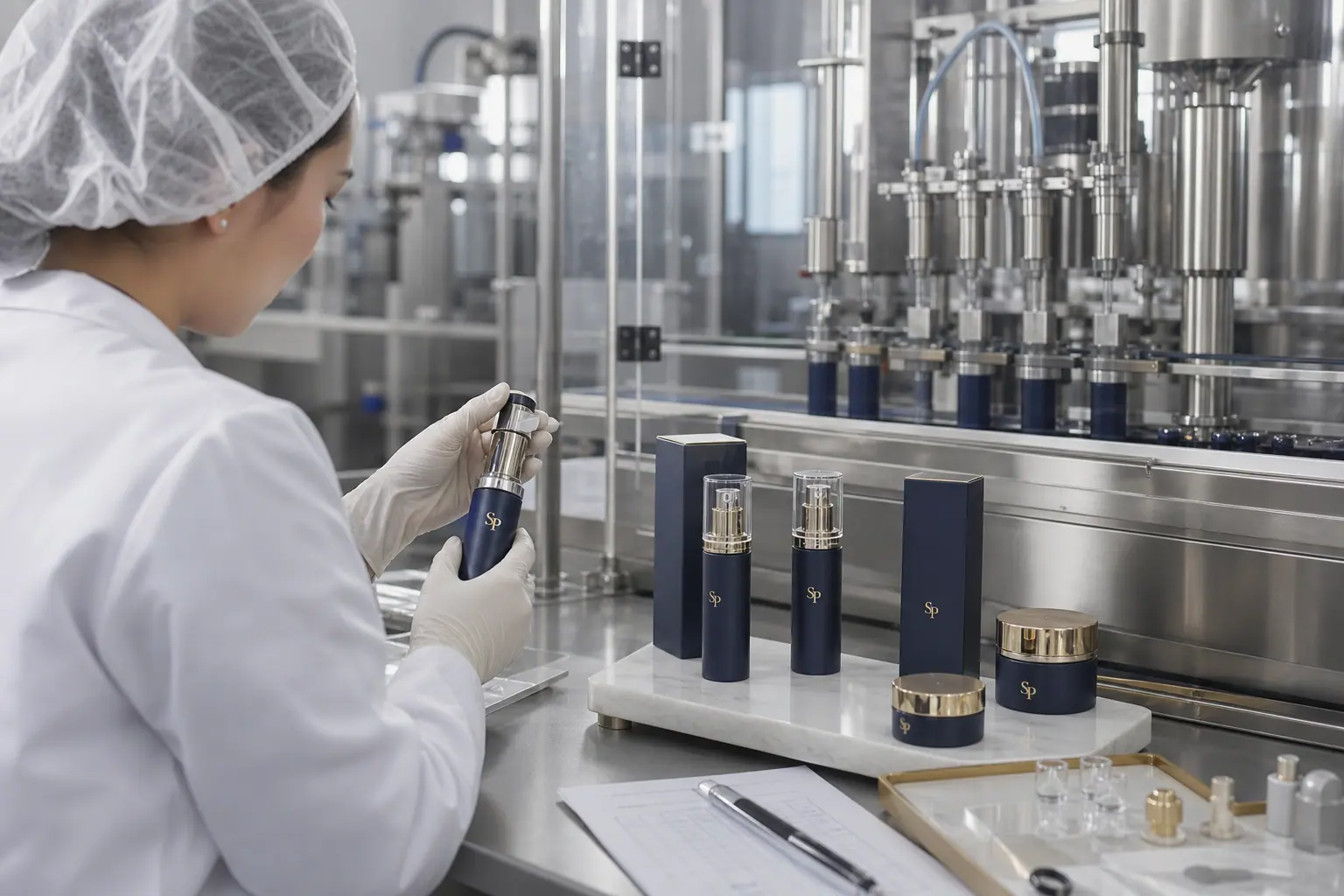
When brands should discuss a line trial
Not every project needs a separate trial. It becomes more relevant for unusual airless systems, highly viscous products, fragile decoration, non-standard closures, narrow openings, complex assembly or a pack that has not previously run on the proposed line.
What the trial should answer
- Can empty components feed and orient reliably?
- Does the formula fill without excessive foaming, stringing or trapped air?
- Can the closure be applied within the agreed torque or assembly condition?
- Are labels, printing or coatings damaged by guides and conveyors?
- Does the finished pack prime, dispense and remain presentable?
- Can inspection and rejection steps distinguish acceptable and nonconforming units?
A good trial has a written objective. Simply reporting that the pack “ran well” is less useful than recording settings, observations, sample size and open actions.
Use representative materials
Trial results are strongest when the formula, components and decoration are representative of the approved project. Prototype parts can be informative, but differences in resin, tolerances, surface finish or dip-tube cut may limit what the result proves.
Plan the decision before the trial starts
Define the pass criteria and approvers in advance. A line trial may lead to approval, a component adjustment, an equipment change or another focused check. It should not become an open-ended production run without a decision record.
Evidence worth retaining
- Component and formula version references.
- Machine and tooling identification.
- Filling, capping and line-speed settings.
- Defect observations and quantities.
- Photos of representative finished units.
- Approved samples and action owners.
Connect the trial to compatibility work
Short line performance and longer formula-pack interaction answer different questions. A pack can run smoothly but later show leakage, discoloration or dispensing changes. Review line evidence alongside the planned packaging compatibility scope.
Frequently asked questions
Is a pilot batch the same as a packaging line trial?
They can overlap, but the objectives differ. A pilot batch may assess scale-up more broadly, while a packaging trial can focus on component handling, filling and assembly.
How many units should be trialled?
There is no universal number. The quantity should be sufficient to test the identified risks and equipment stages, and it should be agreed for the specific project.
Can stock packaging skip the trial?
Sometimes prior line evidence is relevant, but formula, decoration and supplier-batch differences still need consideration.
Discuss the proposed pack, formula format and line risks through the SHANGPIN LAB project brief.