Cosmetic stick performance depends on a narrow balance: firm enough to survive the pack, but soft enough to deliver the intended pay-off. Formula and mechanism therefore need to be developed together.
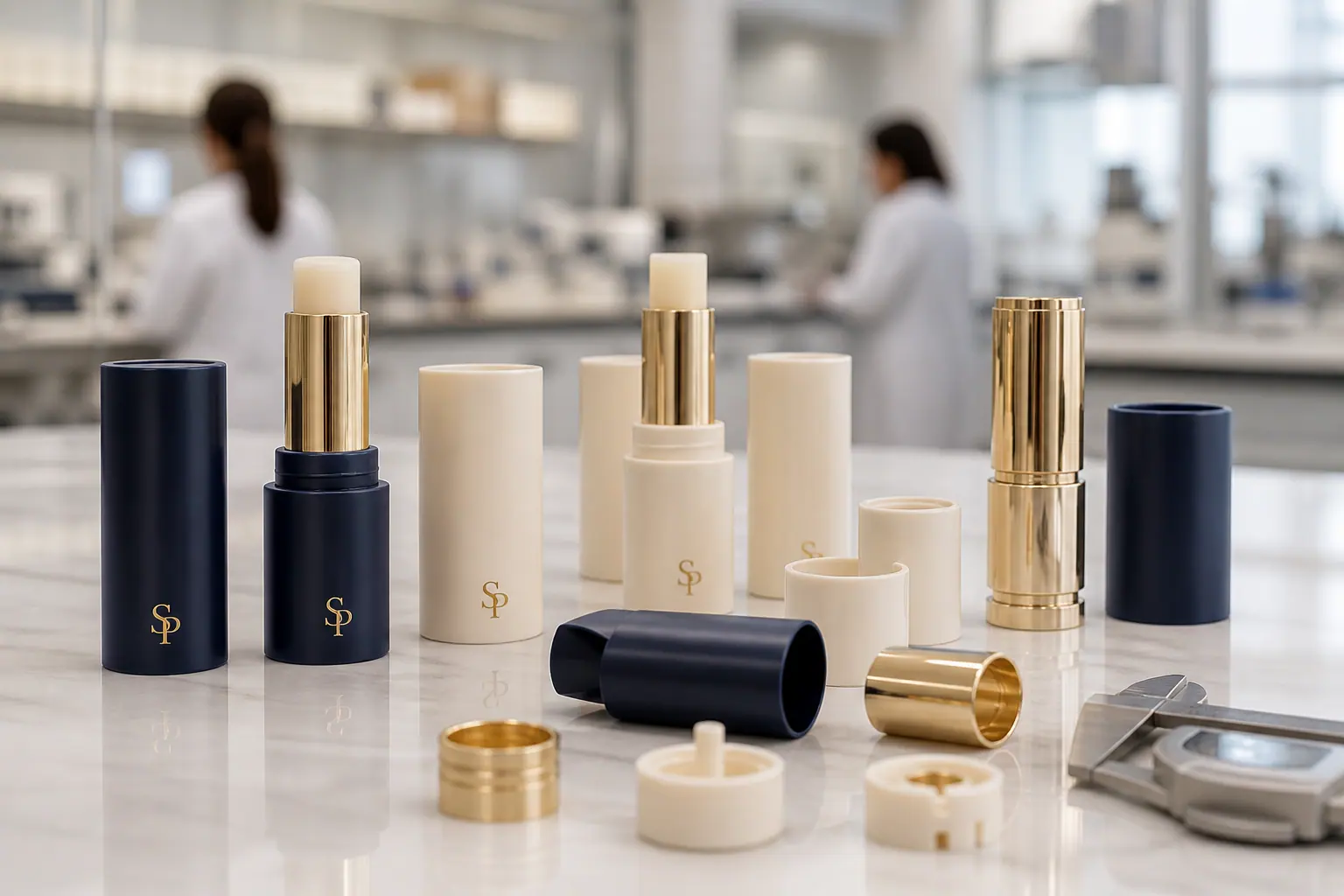
Four observations matter most
- Hardness
- Does the stick resist breakage and deformation under expected use?
- Glide
- Does it move smoothly without dragging or crumbling?
- Pay-off
- How much product transfers in one controlled pass?
- Mechanism fit
- Does the cup, screw and cap support reliable travel and protection?
Temperature is part of the brief
A stick can feel different after warm transport or cool storage. Share distribution markets and likely conditions so the testing plan can be discussed. Acceptance should consider appearance, odor, movement, sweating, breakage and return to use conditions.
Troubleshooting map
If the stick drags, review formula structure, surface and test temperature. If it leans or breaks, review dimensions, filling, cooling and cup support. If the cap marks the product, check bullet height and mechanism travel. Each symptom can have more than one cause, so change one controlled variable at a time.
Artwork and claim discipline
The limited print area makes hierarchy important. Prioritize product identity, required information and readable directions. Cosmetic benefit language should remain truthful, supported and appropriate for the target market; avoid treatment or guaranteed-performance wording.
FAQ
Can one stick base serve several uses?
Possibly, but lip, face, body and hair applications create different sensory, color and claim requirements. Confirm each finished product rather than assuming equivalence.
Review component directions or brief SHANGPIN LAB on your stick format.