A useful hair mask brief describes the experience from scoop to rinse, not only a list of fashionable ingredients. Texture, distribution through wet hair, rinse time and after-feel should be defined for the intended hair routine and market.
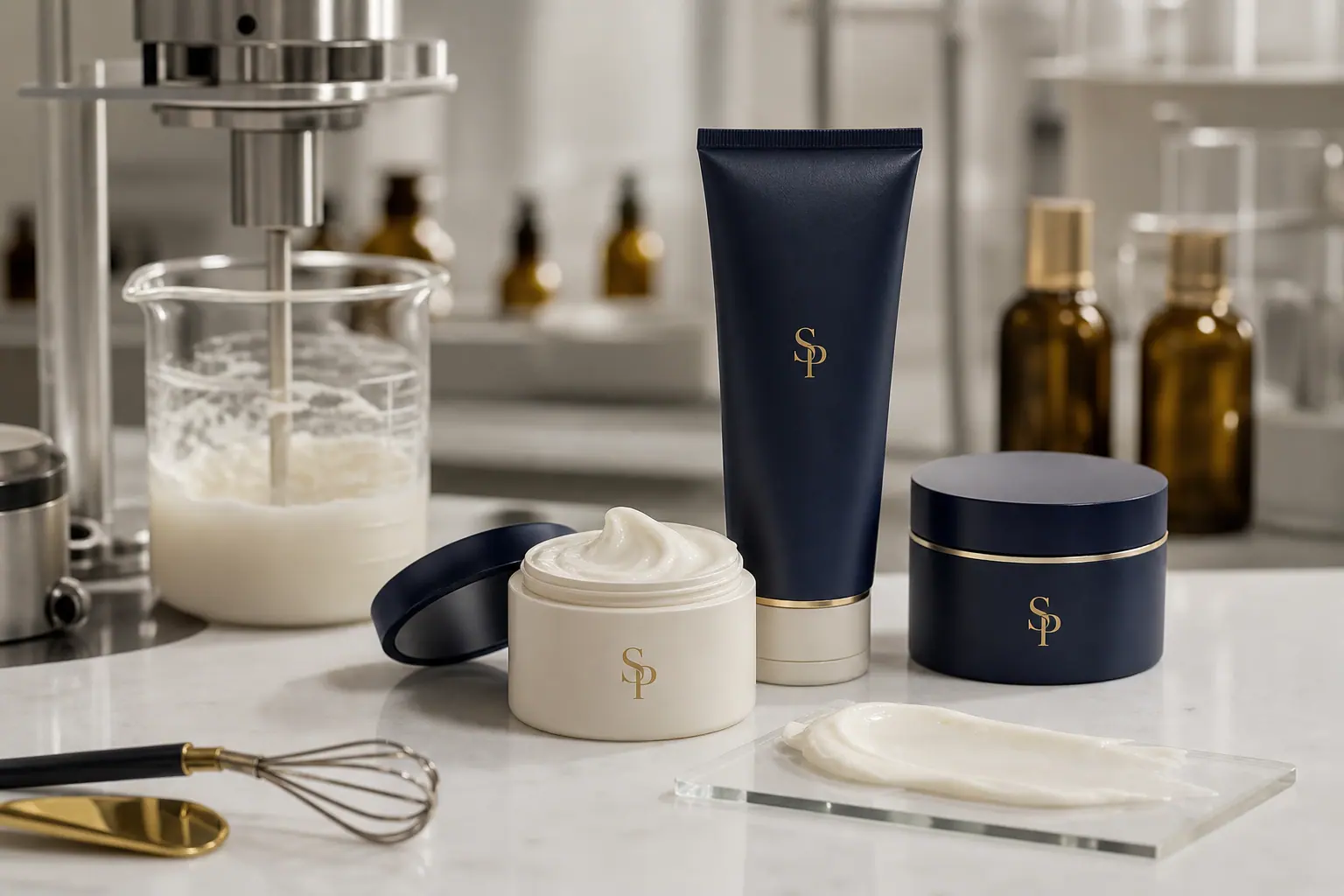
Write a sensory scorecard
Choose a small set of attributes: pickup, spread, wet slip, perceived coating, rinse speed, combing feel and dry finish. Ask reviewers to use the same dose and method. Narrative comments are valuable, but a shared scale makes revisions easier to compare.
Jar or tube?
A jar supports direct access to a dense formula and premium presentation. A tube can improve dosing and reduce water entry during shower use, but high viscosity may challenge evacuation. Review opening size, closure grip, fill behavior, label area and transport risk.
Decision checkpoint before scale
- Formula and fragrance reference approved
- Pack and nominal fill confirmed
- Compatibility and stability plan agreed
- Directions and use amount reviewed
- Market claims checked against support
Be precise with hair-care claims
Statements about softness, smooth feel, manageability or appearance should match the evidence available. Avoid implying that a cosmetic hair mask treats scalp disease or permanently changes hair structure. Market rules and product classification should be reviewed before artwork approval.
FAQ
Why does rinse feel matter to manufacturing?
It helps define the formula target and prevents teams from approving only how the product looks in a jar.
Can fragrance be approved separately?
A scent strip is useful for direction, but final approval should consider the complete base and intended packaging.
Explore SHANGPIN LAB hair-care categories or send a hair mask brief.