A hand cream project succeeds when the formula leaves the tube cleanly, spreads quickly and fits the user’s daily routine. Portability makes closure security, tube recovery and artwork durability especially important.
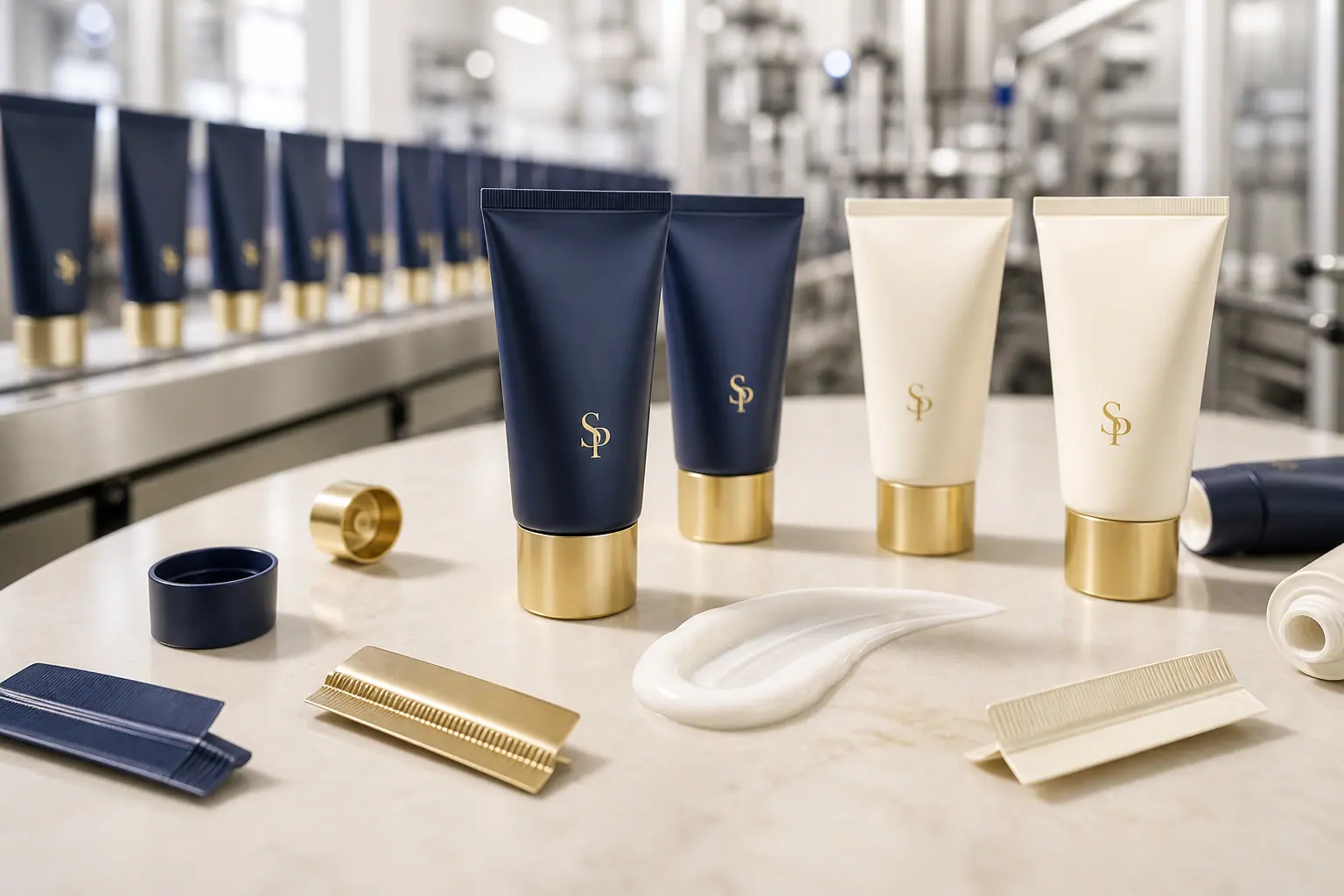
A buyer’s five-minute brief
- State the intended user and use moment.
- Choose rich, balanced or fast-absorbing sensory direction.
- Provide a benchmark and explain what to match or avoid.
- Specify market, tube size, price position and order range.
- List desired claims separately from mandatory label text.
Tube selection is more than color
Material structure, diameter, orifice, shoulder, cap and crimp influence dispensing and appearance. A dense cream may need a different orifice than a fluid lotion. Test cap opening force, leakage, panel recovery and product evacuation with the intended formula.
Artwork must survive real handling
Review print or label adhesion after representative storage and use. Confirm the crimp area, eye mark, safe print zone and orientation before releasing production artwork. Keep a controlled proof and component drawing to reduce version mistakes.
Market-aware copy
Moisturizing, softening and appearance claims should be supported and appropriate to the destination. Avoid language that suggests treatment of eczema, infection or other medical conditions unless the product has the correct legal status and substantiation. Required identity, ingredients, net contents, warnings and responsible-party details vary by market.
FAQ
Should hand cream use a carton?
It depends on retail requirements, protection, information space, cost and sustainability goals. Confirm the sales channel before adding one.
Can one texture suit every climate?
Consumer preference and pack performance may differ. Define priority markets and evaluate samples under relevant conditions.
See SHANGPIN LAB product categories, packaging support, or send an OEM brief.