In a lip oil project, the formula, wiper and applicator are one delivery system. Approving the oil first and selecting the pack later can change pickup, stringing, leakage and the amount deposited on the lips.
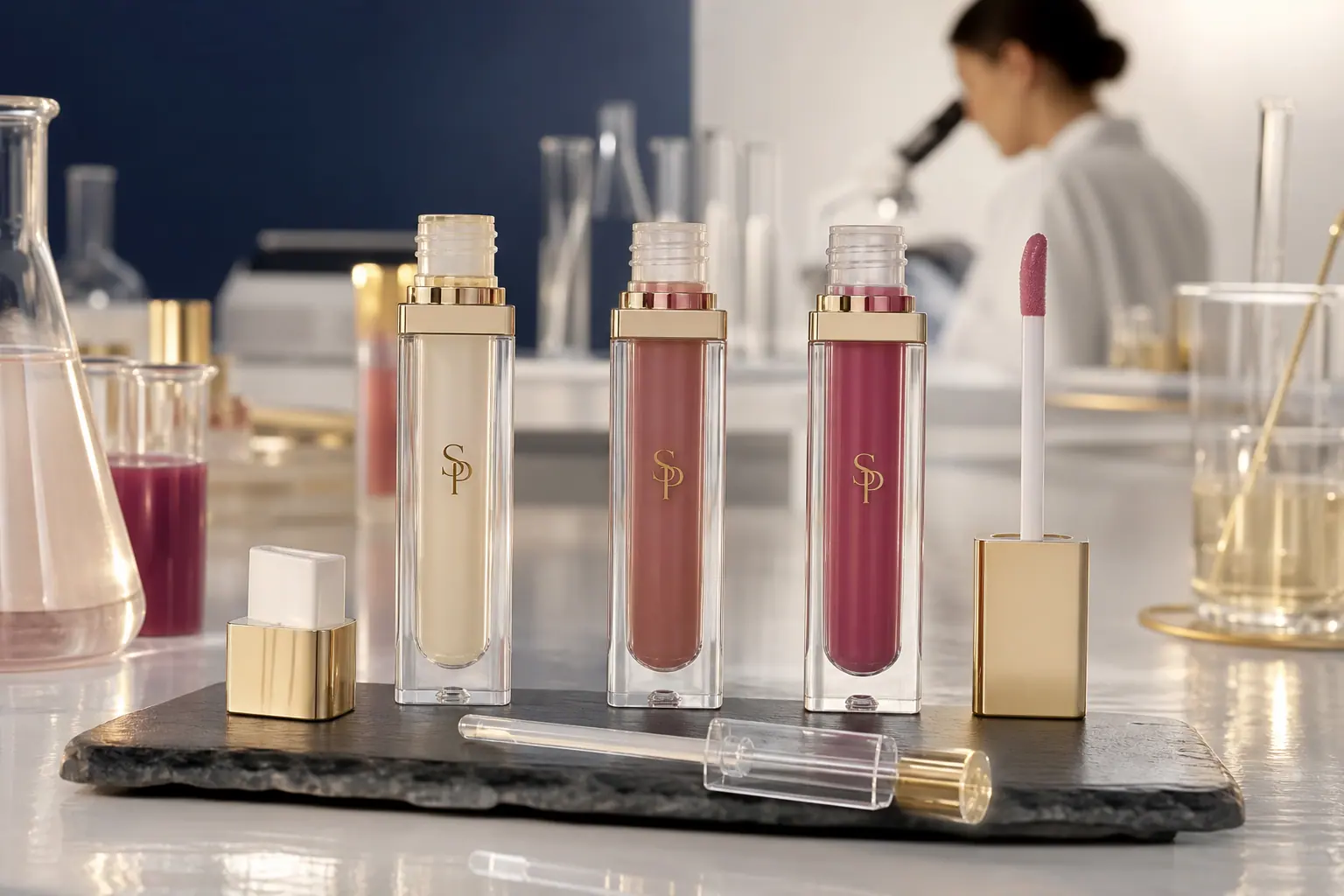
The three-way fit to review
Formula flow: define cushion, slip, tack and after-feel rather than asking only for “thick” or “thin.” Wiper restriction: the opening controls how much formula remains on the stem and applicator. Applicator geometry: shape and flocking influence loading and placement.
Build a shade standard that survives scale-up
For tinted oils, approve color in the intended pack and under agreed lighting. Keep a dated physical reference and written tolerances. The appearance in a clear tube can differ from the applied film, so record both bulk and in-use observations.
What to inspect in a packaging trial
- Insertion and withdrawal force
- Formula accumulation at the neck
- Stem cleanliness after repeated use
- Cap torque and leakage after storage
- Decoration resistance to handling
A short transport simulation and temperature exposure can reveal issues that a desk sample misses. Test conditions should match the intended distribution route where practical.
Keep the brief commercially useful
Include target market, shade count, fill volume, finish, fragrance or flavor direction, pack reference, order range and desired launch date. State whether components must be stock or may use custom decoration. Each choice affects cost and timing.
FAQ
Can one wiper work for every lip oil?
No. Performance depends on formula rheology, applicator dimensions and the component system. Confirm with representative samples.
When should shade names be finalized?
After shade standards are stable and before artwork lock, allowing time for legal and cultural review in each market.
Review SHANGPIN LAB packaging options or start a lip product brief.