A foundation range needs a shade system, not a collection of isolated samples. Undertone, depth, dry-down and pack delivery should be reviewed through one controlled approval process.
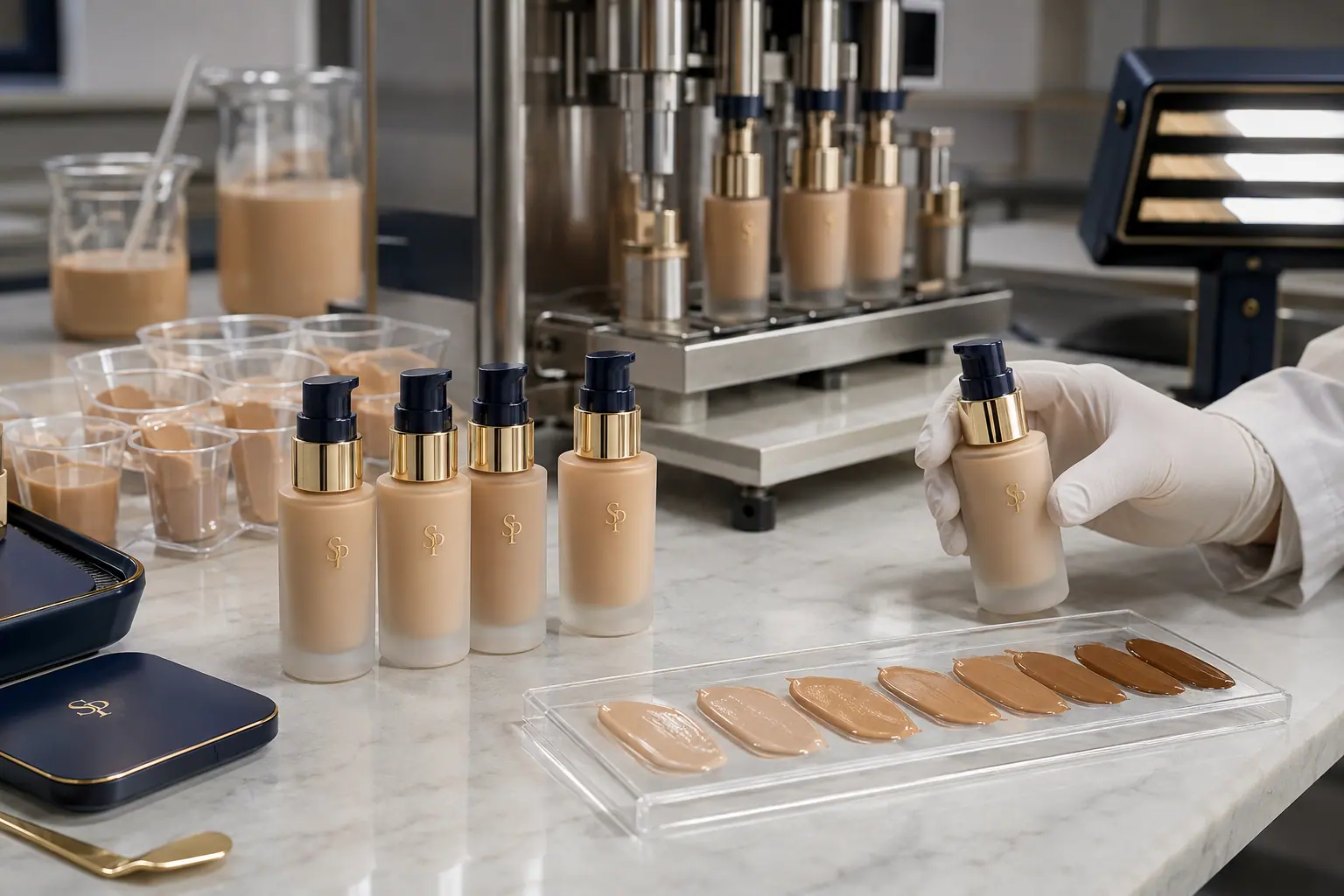
Plan the shade architecture first
Define the intended depth span, undertone logic and commercial number of shades. Identify anchor shades before filling gaps. A balanced architecture helps the development team understand whether a revision concerns one shade or the system as a whole.
Run a timed dry-down check
Compare initial application with agreed later checkpoints under consistent lighting. Note changes in depth, undertone, finish and coverage appearance. Use controlled drawdowns and skin evaluation where suitable, recognizing that perception varies by application and skin characteristics.
Keep a reference hierarchy
- Written shade target
- Dated approved laboratory sample
- Controlled drawdown or applied reference
- First production comparison
If references disagree, define which one governs before production.
Pump delivery belongs in shade approval
Confirm priming, dose, flow, neck cleanliness and evacuation with the intended formula. Frosted or coated bottles can change how the bulk looks through the pack, so review product appearance separately from applied shade.
Claims and market copy
Coverage, finish and appearance wording should be accurate and supported. Avoid universal suitability statements unless the range and evidence justify them. Ingredient, shade, quantity and responsible-party information should be checked for the sales market.
FAQ
How many shades should a new brand launch?
There is no universal number. Audience, channel, price position, testing access and inventory capacity should determine the plan.
See makeup manufacturing scope or submit a foundation brief.