Mascara performance comes from the interaction between bulk, brush and wiper. Changing one element can alter loading, separation, build and clean removal from the tube, so a complete pack trial should precede commercial approval.
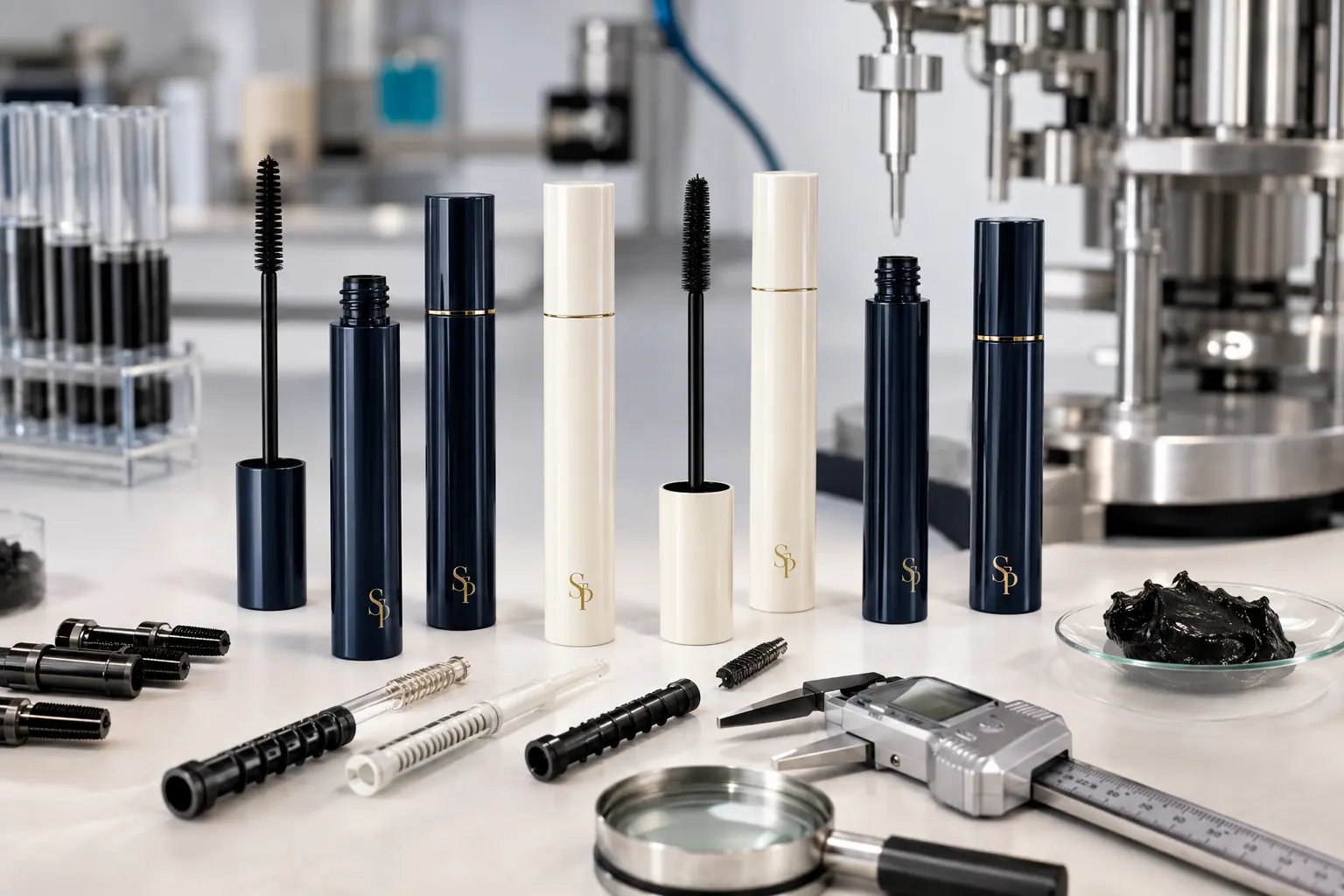
Translate the look into observable criteria
Define whether the product should emphasize separation, visible volume, length appearance or a natural finish. Record coat count, drying interval, clump tolerance and expected wear context. These observations are more useful to a development team than a single adjective such as “dramatic.”
Component decision table
| Element | What to inspect |
|---|---|
| Brush | Shape, fiber or molded profile, flexibility and reach |
| Wiper | Stem cleanliness and amount retained on the brush |
| Tube | Neck fit, closure security and decoration |
| Bulk | Consistency, drying behavior and appearance over time |
Use controlled wear feedback
Keep application method, coat count and evaluation timing consistent. Photograph agreed checkpoints where appropriate. Claims about wear or appearance should be supported by a suitable assessment plan and reviewed for the market.
FAQ
Why can the same bulk feel different with another brush?
The brush and wiper change pickup, distribution and the amount applied per pass. Test the final combination.
When should decoration be approved?
After tube dimensions and materials are controlled, using representative decorated samples before mass production.
Explore SHANGPIN LAB makeup categories and start a mascara brief.