A setting spray is approved in the air and on the face: spray geometry determines how the formula lands, while the formula determines the finish after drying. Testing only one side of that system leaves important questions unanswered.
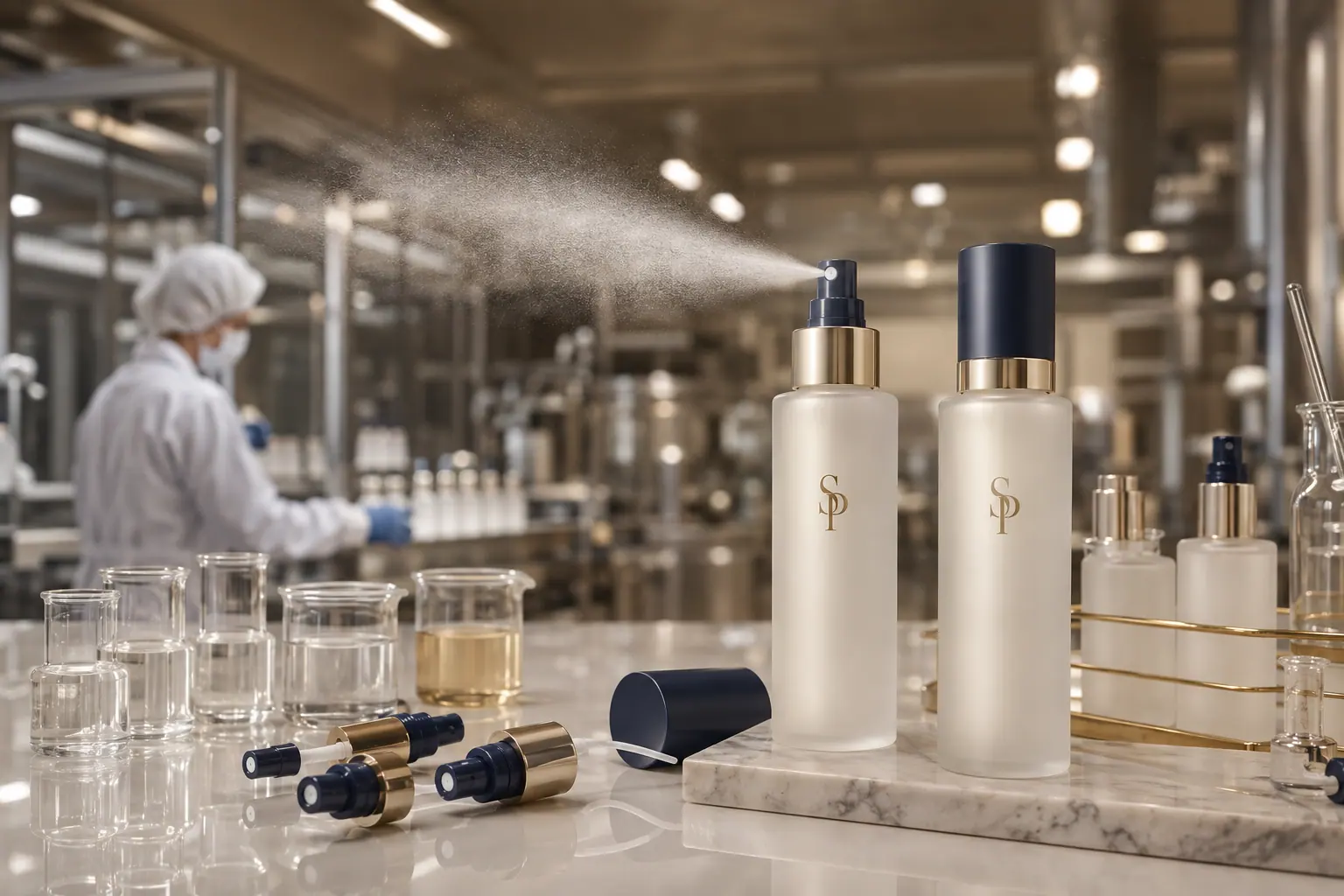
Define a usable spray target
- Number of priming strokes
- Dose per actuation
- Cone width at an agreed distance
- Droplet uniformity and wet spots
- Pattern consistency as the bottle empties
Evaluate the film without vague language
Record drying time, visible shine, tightness, tack, makeup disturbance and comfort after a defined application. If the brief says “natural finish,” explain what that means under the intended makeup routine and lighting.
Failure pattern: the mist feels heavy
Possible contributors include actuator output, spray distance, application count and formula properties. Change one controlled factor at a time rather than adjusting the formula immediately. A component change may solve a delivery problem without altering the approved finish.
Claim review before artwork
Wear and transfer wording should reflect the assessment performed and the conditions tested. Avoid absolute duration or universal-performance promises. Eye-area cautions, flammability considerations where relevant, ingredients and destination-market labeling should be reviewed before printing.
FAQ
Can a facial mist bottle be reused for setting spray?
It may be possible, but desired dose, pattern, formula compatibility and use instructions differ. Confirm the finished system.
Compare SHANGPIN LAB spray packaging or start a setting spray project.