A toner pad is a formula, substrate and container working as one system. Brands should approve all three together because pad absorbency changes the delivered dose, while jar geometry and sealing influence moisture retention during storage and use.
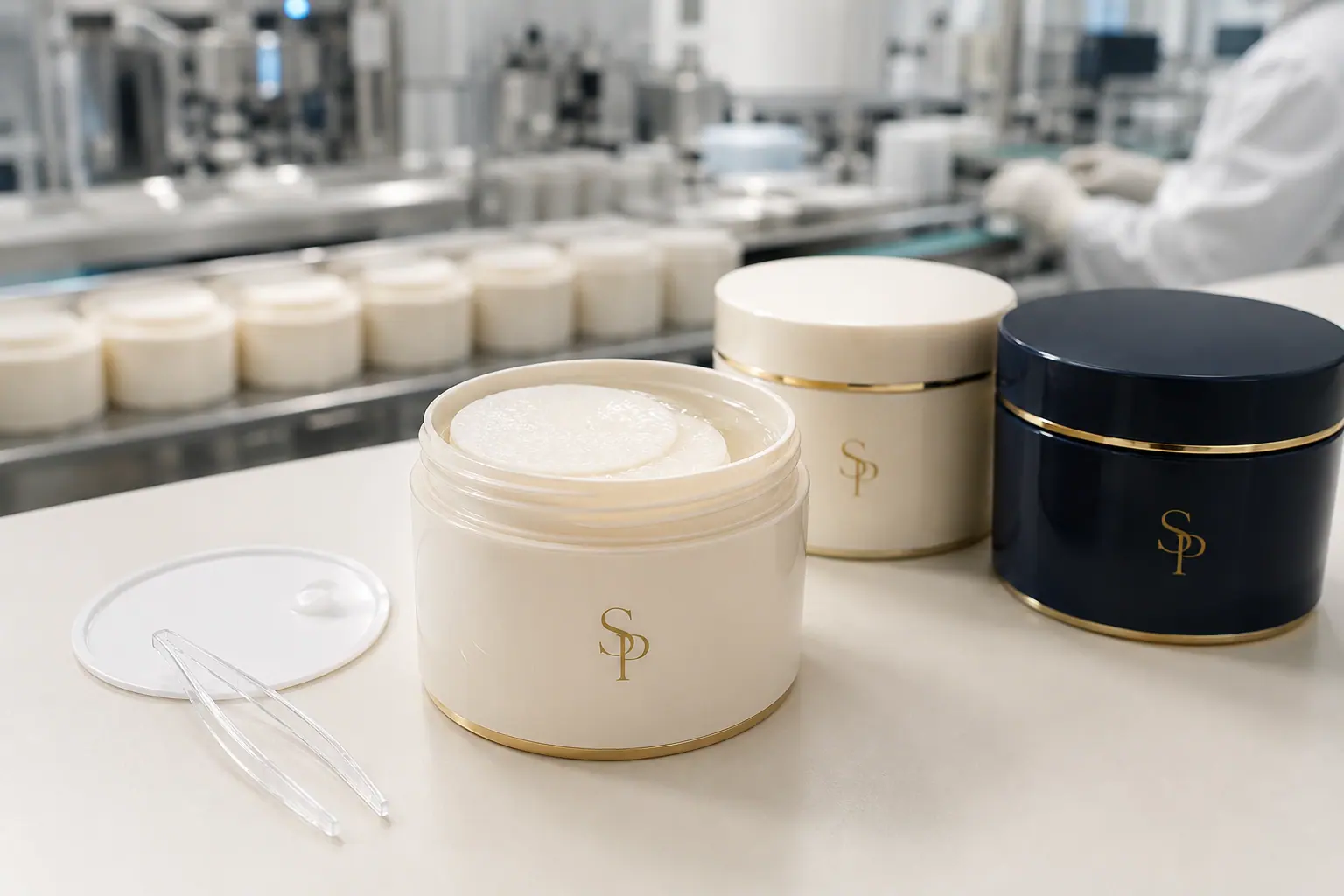
Choose the pad by use, not appearance
Define diameter, thickness, texture, softness and whether one or two sides should feel different. Test how easily users lift a single pad and how evenly the essence spreads. A thicker pad is not automatically preferable if it holds more liquid than the intended application needs.
Set an essence-loading target
Record the fill quantity per jar, pad count and acceptable wetness at the top, middle and bottom. Review the first pad and the last pad after representative storage. Formula viscosity and the packing sequence can affect distribution.
Jar and seal checkpoints
- Opening size supports clean pad removal.
- Inner seal and closure remain secure.
- Tweezers have a practical storage location.
- Decoration tolerates expected handling.
- Label text remains readable on the curved surface.
Claim and directions review
Directions should state where and how the pad is used, including eye-area cautions when relevant. Keep benefit wording within supported cosmetic appearance or sensory effects. Final ingredients, warnings and responsible-party information should be reviewed for the destination market before artwork approval.
FAQ
Can a toner formula be transferred directly into pads?
Not without review. Substrate interaction, delivered dose, preservation and container use pattern should be considered for the finished format.
Explore SHANGPIN LAB skincare categories, compare packaging directions, or send a project brief.