Viscosity drift is a change in a product’s measured flow behaviour between development, processing, filling or storage stages. It can affect appearance, dispensing and line performance, but the number is meaningful only when the formula version and test conditions are defined.
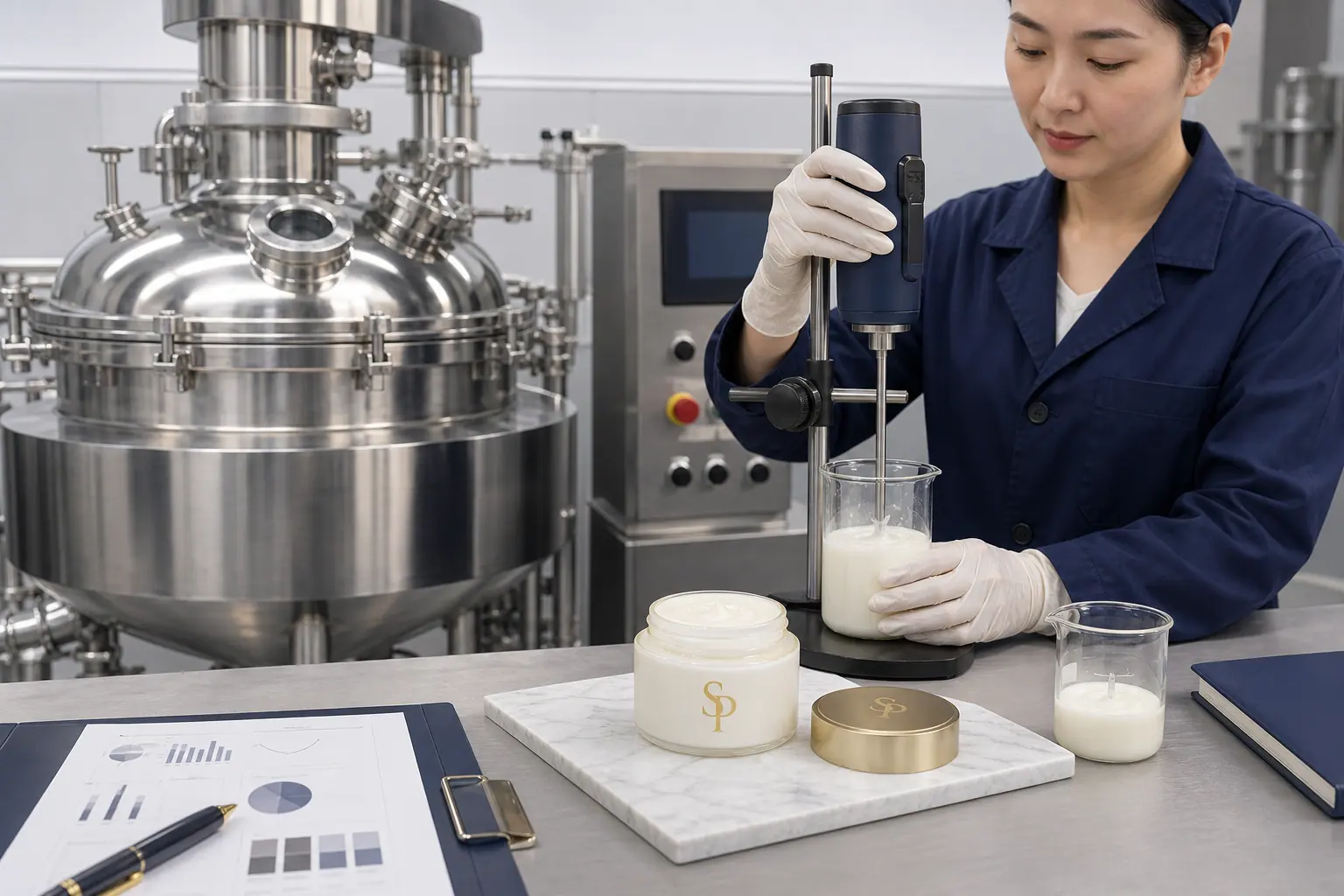
Why a lab sample may not behave like a bulk batch
Scale changes mixing energy, heat transfer, addition time, vessel geometry and deaeration. A formula may also continue to structure after manufacture. These differences do not automatically indicate a defect, but they should be understood before the product and packaging are approved for routine production.
Questions that make the review more useful
- Was the same formula revision used?
- At what temperature and age was viscosity measured?
- Which instrument, spindle, speed and timing were used?
- Were air bubbles or incomplete cooling present?
- Did the processing sequence or hold time differ?
- How did the product dispense from the proposed pack?
Do not evaluate one number in isolation
Viscosity is one part of a wider product specification. Appearance, homogeneity, pH where relevant, density, sensory profile and packaging behaviour may also inform the decision. The appropriate checks depend on the formula and intended market.
Connect development targets to production methods
A specification should identify the method and sampling condition. Without those details, two correct measurements can look inconsistent simply because they were taken at different temperatures or using different settings.
A practical scale-up sequence
- Freeze the development formula and reference sample.
- Identify scale-sensitive process steps.
- Define the measurement method and timing.
- Compare bulk results with sensory and dispensing observations.
- Record approved process ranges and any follow-up work.
Packaging can reveal viscosity problems
A cream may look acceptable in a beaker yet prime slowly through a pump, string at the nozzle or trap air in a narrow bottle. Evaluate the formula and delivery system together through the packaging route and representative samples.
Frequently asked questions
Does higher viscosity mean better quality?
No. The suitable profile depends on product design, sensory target, dispensing system and specification.
Can viscosity be adjusted after a bulk batch is made?
Any adjustment requires technical assessment and controlled documentation. It should not be assumed to be simple or appropriate.
When should a brand request a pilot or focused scale-up review?
Consider it when the formula is process-sensitive, the pack has a narrow operating window, or previous samples show meaningful differences after scale change.
Explore SHANGPIN LAB’s manufacturing process or submit your formula and pack brief.